
An international website can look translated while still making a language page unreachable from some countries. A visitor who selects a specific language may be sent back to the automatically detected version. Before an authorized multilingual launch, test explicit language URLs with regional residential proxies instead of checking only the homepage.
Write an access contract
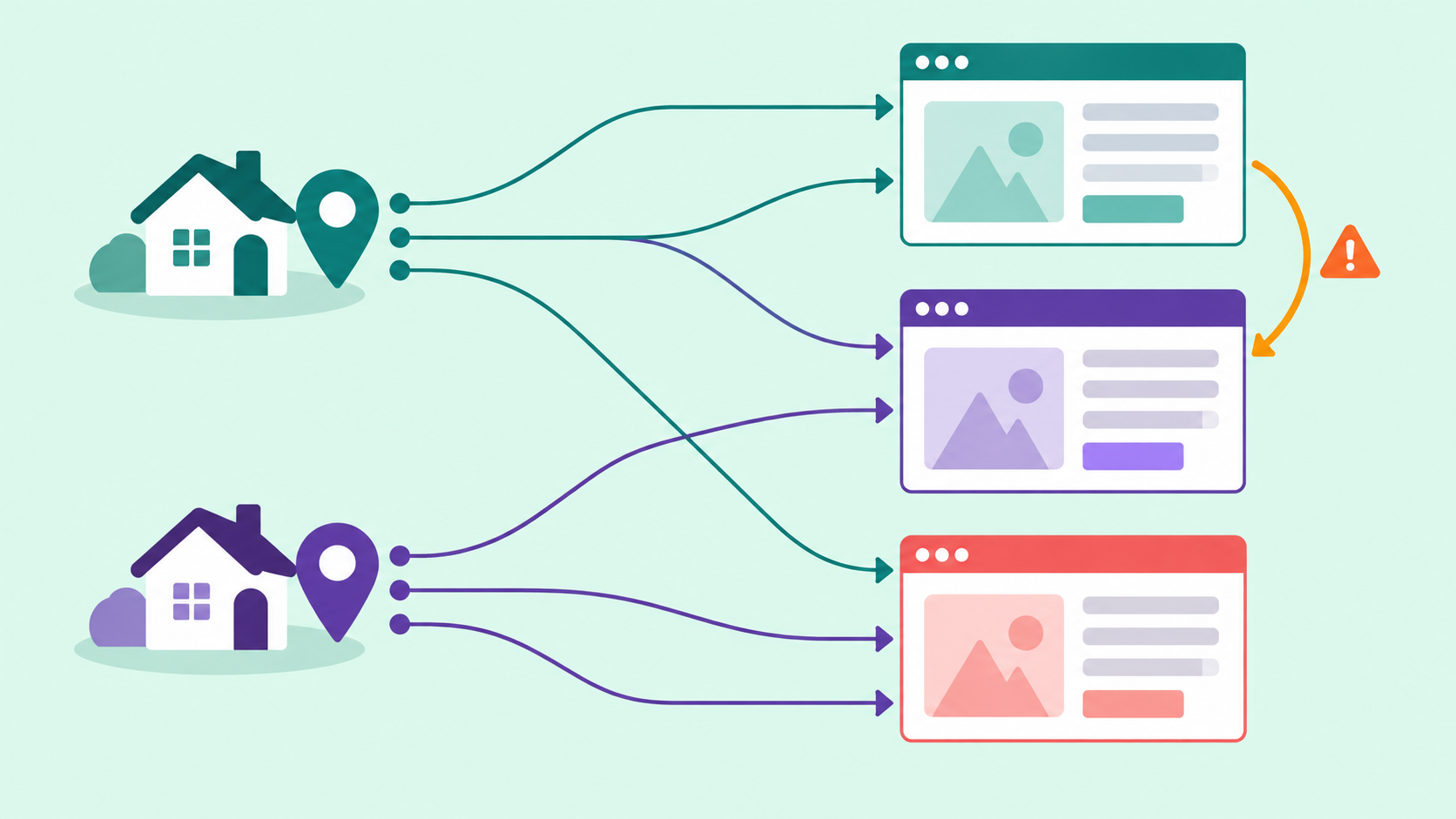
List the intended public URL for each language and the expected behavior when someone opens it directly. Decide with the site owner whether location should produce a suggestion or an approved redirect. Record legitimate access restrictions separately. This guide does not require overriding a restriction; it tests whether implementation matches the agreed rule.
Google Search Central recommends separate locale URLs and hreflang annotations for locale-adaptive sites. That is an architectural consideration, not a promise of indexing or ranking. A residential proxy represents a regional user viewpoint; it does not reproduce or authenticate Googlebot.
1. Build a small matrix
- Choose two authorized regions and three explicit language URLs from your own site. Include the original homepage as a comparison.
- Keep browser version, viewport and logged-out state constant. Begin with the same browser language across regions.
- Use a clean browser context for each first visit. Record the selected proxy region and the observed destination-visible exit separately.
- Repeat one region with a different browser language while keeping the route fixed. This separates location handling from language preference handling.
2. Trace direct access
Open each explicit language URL directly, not through a search result or remembered link. Record the initial URL, response statuses, every redirect destination, final URL and the actual page language. Check the headline and substantive content; a translated navigation bar alone is not proof that the body is localized.
Use your own approved test URL placeholders in tools and avoid secret-bearing URL exports. If a case redirects, identify whether it comes from an HTTP response, client-side code or a stored preference. A final 200 can hide an incorrect redirect, so preserve the route evidence.
3. Test the visitor's explicit choice
From the site's language selector, choose a different available language. Verify the equivalent page opens where the design provides one, then reload and follow a related internal link. Check whether a stored preference survives as specified. Next, start a fresh context to ensure the previous visitor's preference has not contaminated the initial-access test.
A useful suggestion leaves room for deliberate visitor choice when that is the approved design. Do not change the site merely because a proxy test disagrees with an undocumented assumption; resolve the expected rule with the owner first.
4. Inspect the implementation evidence
On the owned pages, compare declared language, configured canonical destination and alternate-language references with the owner's approved SEO map. Fetch the linked alternate URLs and verify they reach the intended content. Use the site owner's search-management evidence for crawl and indexing questions; proxy screenshots alone cannot answer them.
If only reused profiles fail, investigate preference storage. If one region fails in clean contexts, compare that region's application or CDN rules. If changing browser language changes results at a fixed exit, investigate language negotiation. If all direct language URLs collapse to one version, examine the routing design rather than purchase more exit IPs.
When 98IP is useful
98IP dynamic residential IP can provide regional viewpoints for this authorized access matrix. Choose currently available country options and verify actual routing. Keep one route consistent within a case where supported, and record exit changes. It cannot correct language routing or guarantee search rankings. Refer to the operation guides for current setup and limits; products are intended for overseas network environments. No city availability or browser compatibility result is claimed without testing.
FAQ and release checklist
Does a country's IP determine a visitor's language? It is only one input; explicit choice and browser preferences can differ.
Is HTTP 200 enough? No. Verify the final URL and actual content language too.
Does this simulate a search crawler? No. Use it for visitor access QA and separate crawler evidence for SEO diagnosis.
Before release, require an approved URL map, recorded region and browser-language factors, correct direct access, expected selector persistence, verified internal language links and assigned owners for every mismatch. Test only authorized sites, preserve TLS verification and keep personal data out of evidence.
Related Recommendations
- Proxy Geo-Targeting Accuracy Audit: Test Country, Region, City and ASN Claims
- How to Test a Proxy for DNS Leaks Before You Buy
- How to Detect Stale Cached Responses in Proxy Data Collection
- How to Test Proxy Connection Pool Age and Safe Reuse
- How to Audit Proxy Bypass and PAC Rules in Browser Automation
- Browser High-Speed Proxy IP: Detailed Selection and Usage Guide
- How to turn off global proxy settings
- Preventing agent retry storms: backoff, jitter, budgeting and security recovery
- Playwright Proxy Configuration Guide: Authentication, Isolation and Debugging
- How to Test Residential Proxy ASN Targeting Before You Buy