
A regional browser test has not clicked the next product link, yet the receiver already shows a request for it. Later, clicking produces no new network request. That sequence can be consistent with prefetch and reuse; it is not enough to prove a proxy retry, duplicate customer visit or lost request. This guide helps authorized browser-testing teams collect the evidence needed to distinguish those outcomes. It reports no measured traffic savings or 98IP performance.
1. Define what each observation counts
Keep four records separate: a network fetch attempt, a successful resource response, a navigation that becomes visible in the test browser, and a business event confirmed by the owned application. A request log alone does not establish the other three. Agree with the owner which event the acceptance test needs, and define an independent page marker for the expected product and market.
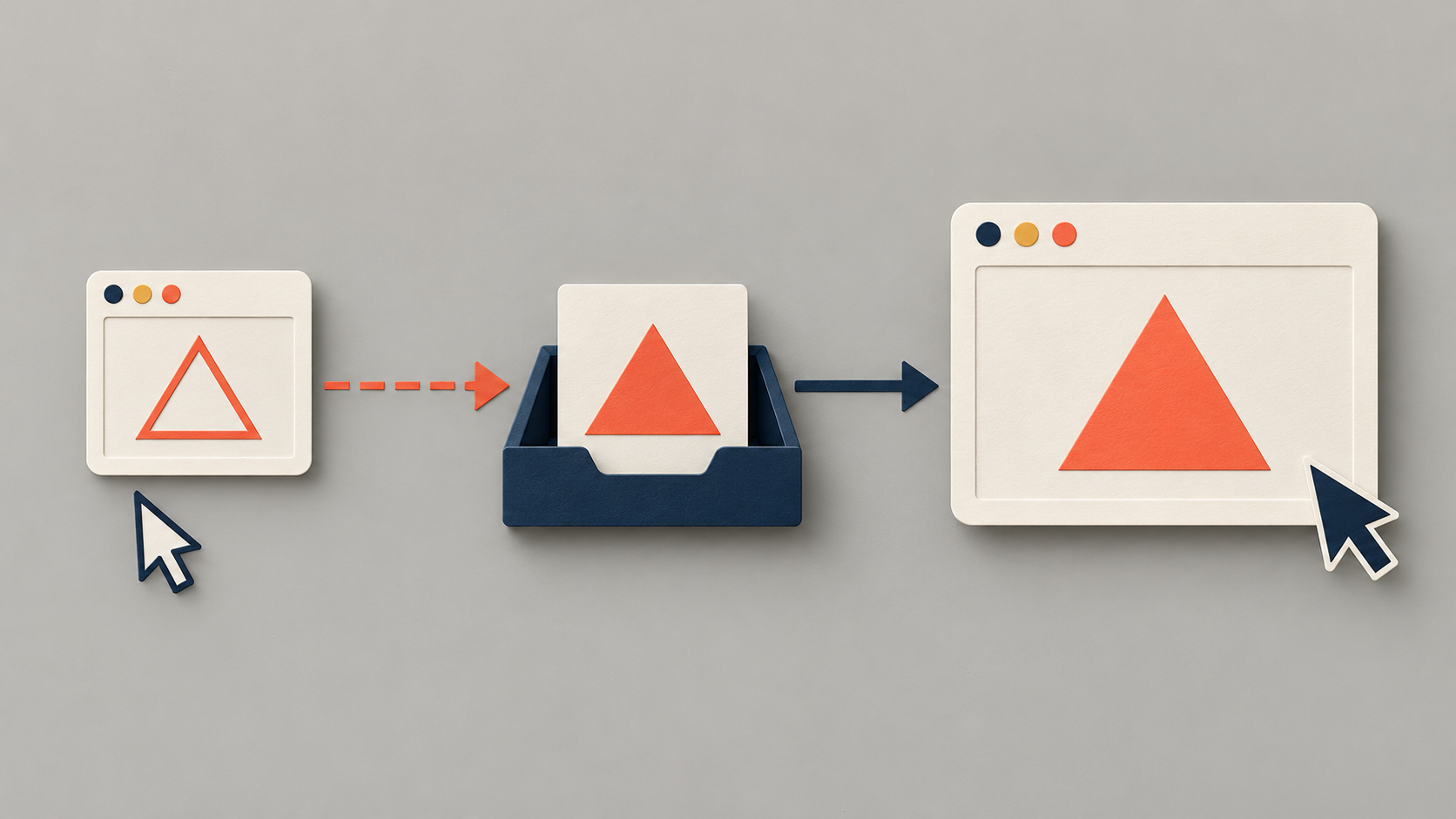
Prefetch anticipates a possible future need. A browser may fetch and retain a resource before navigation. Implementation and eligibility vary; a hint is not a promise that the browser will perform it. Distinguish prefetch from prerender, which can prepare a page in a hidden state and later activate it. Do not infer script execution or visibility merely from a document request.
2. Inventory the mechanism and local state
On an owned staging page, inspect link hints, speculation rules and framework navigation settings. Record the exact mechanism rather than calling every background request prefetch. Check whether the initiator is a hint, application fetch, service worker, extension or test harness. Save browser build, page version, selected market, language, session, cache state and the actual proxy exit.
Where supported and present, Sec-Purpose:prefetch helps label a speculative request. Preserve its observed value, initiator and timestamp, but do not fabricate that header in page JavaScript to simulate browser behavior. Its absence does not prove a foreground navigation. Combine browser and receiver evidence, and mark unavailable fields unknown.
3. Run a small owned two-page experiment
- Prepare synthetic pageA and harmless pageB on the approved staging origin. GiveB a fixed product/market marker and no purchase, logout, notification or other state-changing action. Correlate runs using the owner's approved log context; do not add arbitrary cache-busting query parameters.
- Use an isolated test profile with documented initial state. Start capture before loadingA, and leave the pointer away fromB's link until the planned action. Record extensions and service-worker state rather than changing a personal profile.
- In the owner's control variant, disable only the selected site's prefetch mechanism. LoadA, wait a fixed observation interval without selectingB, then navigate toB using the planned action. Record before-action requests, action time, final URL and visible marker.
- Run the matching prefetch-enabled variant with equivalent initial state and the same observation interval. Do not click during the pre-action phase. Inspect browser initiators, any purpose metadata, receiver attempts and cache evidence.
- Navigate toB and determine whether the browser reused the prefetched result, fetched again, or never completed the intended navigation. Validate the visible marker independently of the number of requests.
- Repeat the pair through the selected regional proxy, holding browser and site settings fixed. Change another route only in a separate comparison, checking actual egress each time.
Set a small run and byte budget. Document whether DevTools cache-disabling settings were active: a test that disables normal reuse cannot establish how ordinary cached navigation behaves. Keep preload, prerender and unrelated background fetches out of the selected experiment, or explicitly label them as separate cases.
4. Classify the result without inventing visits
- B is fetched before the action, with matching speculative evidence: classify a pre-action fetch, not a user click or a retry by default.
- B becomes visible after the action without a second request, and reuse is evidenced: classify successful navigation using retained data, not missing proxy traffic.
- B is requested again: inspect eligibility, response caching policy, credentials/context and the actual mechanism before declaring duplication. A fresh fetch may be expected.
- The hint exists but no speculative request occurs: record that it was not observed. Browser eligibility or settings may prevent execution; do not mark a proxy failure from the hint alone.
- A hidden prepared page activates: classify prerender separately and validate activation evidence. Do not equate a hidden load with an already-visible visit.
- Receiver and browser counts disagree: reconcile cache, redirects, automatic retries and observation boundaries before publishing any count.
For an owned application, adjust only the responsible speculative-loading configuration if the agreed request budget or side-effect contract fails. Rerun both variants and verify that ordinary navigation still works. Never suppress genuine user activity in reporting merely to make a test pass. For a third-party research target, preserve its approved access policy and report observations without modifying its loading rules.
5. Relate the evidence to 98IP usage
When a test needs regional observation, consult the 98IP residential proxy product page and use settings supported by the configuration documentation and your account. Hold the region and session stable within each enabled/control pair so routing changes do not confound the comparison.
Client background fetching can contribute network activity, but browser transfer figures and receiver counts are not a billing ledger. Compare them with the account's actual usage records under the applicable plan; this guide makes no claim about charging rules or savings. A proxy does not guarantee a browser will prefetch or reuse a response, and an ordinary non-intercepting HTTPS proxy cannot rewrite encrypted page hints.
Use owned synthetic pages and limited requests. Do not generate live advertisement clicks, orders or false analytics events, and do not use prefetch metadata to evade access controls. Keep tokens, cookies and proxy passwords out of shared traces. Report no traffic, registration, conversion or order count without the corresponding verified evidence.
6. Acceptance checklist and questions
- The owner-defined event and independent page marker are explicit.
- Mechanism, initiator, browser, page version and cache state are recorded.
- Before-action observation and visible navigation are separately timestamped.
- Enabled/control variants begin with equivalent state and fixed route/session.
- Reuse, refetch, skipped hint and prerender are distinct outcomes.
- Usage comparisons rely on real account evidence, with no fabricated business events.
Does an extra request mean the proxy retried? No. Identify its initiator and relation to the planned action first.
Does no request after a click mean navigation failed? Not by itself. Check retained-response evidence and the visible product marker.
Should every browser be required to prefetch? Only under an explicitly supported test contract. Record an unavailable or skipped feature honestly rather than promising uniform behavior.
Related Recommendations
- How to Test Localized Checkout with Residential Proxies
- HTTP 202 Through a Proxy: Poll the Existing Job Before Counting Completion
- Retry-After Through a Proxy: Test Seconds, HTTP Dates and the Actual Dispatch Boundary
- Proxy Worker Health Checks: Avoid Restart Loops During Remote Outages
- How to Test Cross-Market Proxy Failover Without Corrupting Geo Data
- How to set a computer to access the Internet with static IP? Here are the detailed steps
- Regional Proxy Screenshots Look Incomplete? Define the Capture-Ready State
- Proxy Response Integrity Test: Detect Truncation, Decompression Errors, and False Success
- Proxy PAC Failover Test: Verify Routing, Standby Order and DIRECT Safety
- How to set up the Firefox proxy server? Just these few steps are easy to get done