
An API call through a residential proxy returns204, then the application reports an unexpected end of JSON. Those observations can describe a completed HTTP response followed by a local decoder failure. Treating both as a failed network call can trigger an unnecessary repeat operation. This guide gives authorized integration teams a controlled way to identify that boundary. It is not a report of measured 98IP behavior.
1. Check the endpoint contract before decoding
HTTP204 means the request succeeded without response content. The status is not a promise of a JSON document, even if a generic client wrapper expects one. An empty body is not the JSON literal null, an empty object or an empty array. Response.json parses body text; text that cannot be parsed produces a SyntaxError.
Ask the API owner which methods and outcomes may return204, which require a representation, and what application evidence confirms the intended operation. Record endpoint version, method, final target and expected outcome. Do not change a third-party API contract by inventing a placeholder object. A success status alone is also insufficient to establish that the correct account, resource or business operation was selected.
2. Preserve transport evidence separately
Save the actual response status, non-secret headers, redirect chain and any client transport exception before the wrapper transforms them. Identify whether the response belongs to HTTP proxy CONNECT or the target HTTP exchange inside TLS. A completed CONNECT does not establish the target API outcome; SOCKS negotiation is a separate layer.
Compare the time the response completed with the time JSON parsing failed. Record client build, decoder policy, request correlation ID and effective method. Do not label a local parser exception as a proxy timeout when an actual completed204 is available. If the response never completed or the trace is unavailable, keep the result unknown instead of synthesizing a204 from zero bytes.
3. Exercise three independent owned fixtures
- Use an owner-approved staging endpoint with no real order, payment, notification or deletion. Give each attempt independent log correlation and a fixed expected behavior.
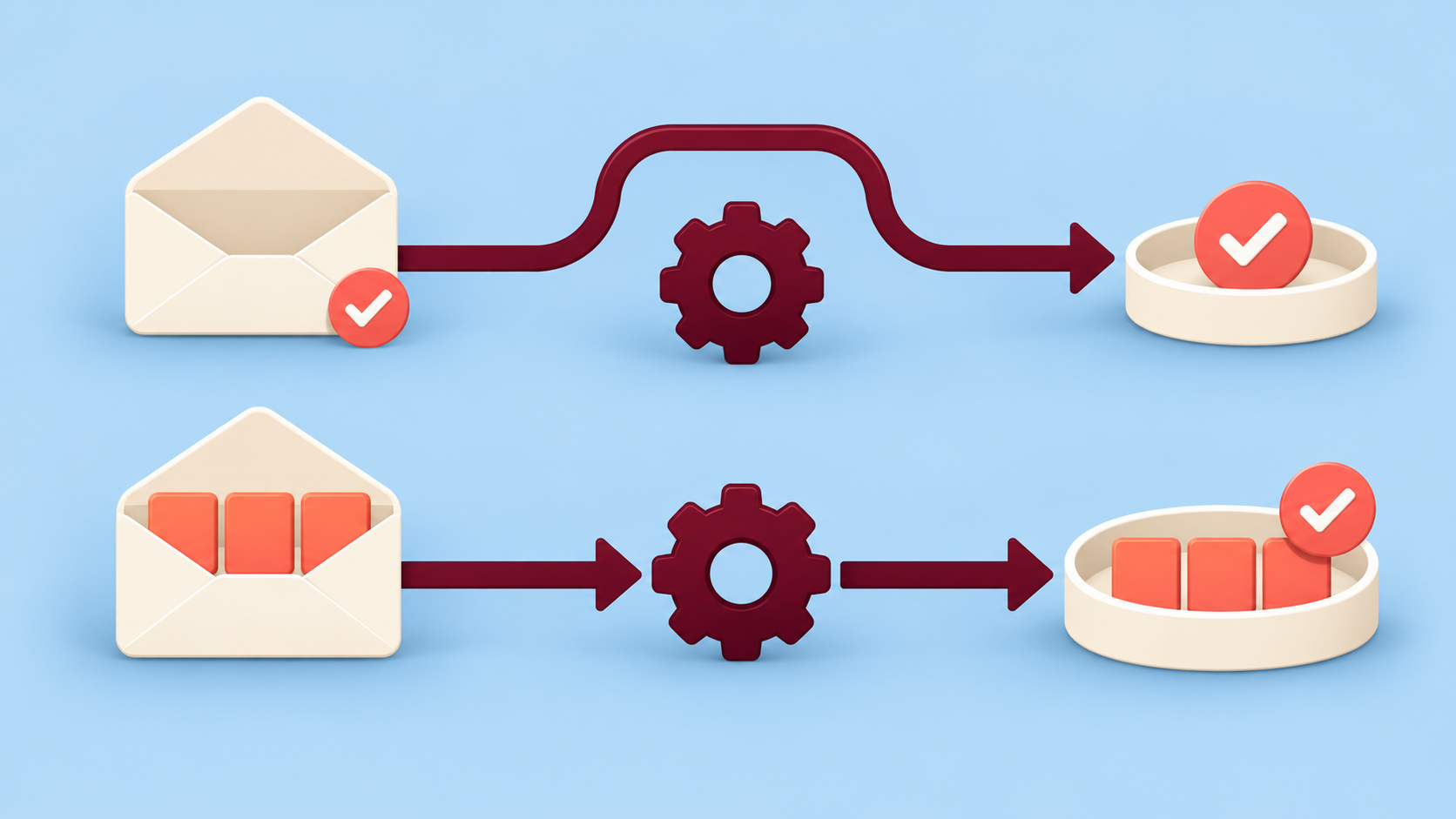
- FixtureA returns a valid204 with no response content. The client should take the endpoint's agreed no-content success path, without invoking the JSON decoder or creating a replacement payload.
- FixtureB returns200 with the owner's small valid JSON marker. Confirm normal decoding and exact marker validation still work.
- FixtureC returns an intentionally invalid response for the contract, such as200 with an empty body where JSON is required. It must stay a decoder or contract failure rather than being silently accepted as if it were204.
- Run the same cases on an approved baseline and selected proxy route, keeping client, target, account state and decoder settings fixed. Record actual egress and hold session policy stable.
Set a small attempt budget and record every automatic retry inside the library as well as the application. A test passes only when the wrapper chooses the correct branch for all three fixtures. If the baseline is not authorized, state its absence. Do not fabricate transport faults or malformed responses on a public service to complete the matrix.
4. Repair response dispatch, not the evidence
On an owned client, dispatch according to the documented status and endpoint contract before requesting a decoder. Represent no-content success explicitly in the application model. For a response that should contain JSON, retain parsing and schema validation; do not catch every parsing error and return an empty object. If middleware consumes the response stream before the decoder, investigate that separately rather than treating all decoder failures as empty content.
On an owned server, a204 must not carry response content or a Content-Length header. Do not add an empty JSON object merely to appease the client while retaining204. If the contract needs a representation, the owner should deliberately revise the response behavior and update clients together. Keep any actual nonconformance in the evidence, since a browser view may hide bytes it discards.
- Completed204 followed by JSON failure: inspect decoder selection and the wrapper's handling of no-content outcomes.
- 200 with required JSON missing: preserve the error and investigate the response producer or contract mismatch.
- No completed response: diagnose transport and operation status independently; zero received bytes do not identify a status.
- Correct204 but UI still spins: check the application completion state and independent acknowledgement, not only parsing.
5. Keep successful writes out of automatic retry loops
A local decoder failure after a completed response must not automatically reset the operation to unsent. For an existing write integration, reconcile the owner's operation status or read-back mechanism before manual resubmission. Preserve the original operation identity under the service's documented idempotency policy; do not create a fresh key just to make a retry possible.
Read-back is a separate check with its own authorization, freshness and error handling. A failed read-back does not prove the original write failed. If the outcome remains uncertain, stop the write loop and report it as unknown. See the POST timeout and duplicate-submission guide for that recovery workflow. Test dispatch using harmless fixtures, not by replaying customer transactions.
6. Apply the route control and acceptance checklist
When authorized regional API testing needs a residential route, consult the 98IP residential proxy product page and use the configuration documentation and account-supported parameters. Check egress and compare one route at a time after fixing the client contract.
A proxy does not manufacture a JSON representation for204 or guarantee the business outcome. An ordinary non-intercepting HTTPS proxy cannot rewrite the encrypted target payload. Limit requests and traffic, review account usage and redact credentials, cookies and customer data. This guide promises no measured throughput, compatibility or billing result; it does not authorize bypassing target controls.
- Endpoint method, version and allowed no-content outcome are documented.
- Actual target response completion is separate from CONNECT and local decode errors.
- Valid204, valid200JSON and invalid required-JSON fixtures take distinct paths.
- No-content success neither invokes JSON parsing nor invents an application payload.
- Required representations still fail visibly when missing or invalid.
- Unknown writes are reconciled, not repeatedly submitted after a parser error.
Does204 prove the proxy removed JSON? No. First check whether the endpoint intentionally returns no content and whether the trace is complete.
Should every empty body count as success? No. A200 endpoint requiring JSON must still meet that contract.
Will changing IP fix the decoder? It does not repair decoder dispatch. Control the route while reproducing the client behavior instead.
Related Recommendations
- How to Test Encrypted Client Hello Through a Proxy
- How to Test HTTPS Proxy TLS and Cipher Compatibility Before Purchase
- How to Test GeoDNS Consistency Across Proxy Markets
- Regional Proxy Time Zone Testing: Prevent Wrong Dates and Deadlines
- How to turn off global proxy settings
- Diagnose IPv6 Proxy MTU Black Holes Before They Reach Production
- Python Rotating Proxy Guide: Sessions, Retries and Troubleshooting
- Playwright Proxy Configuration Guide: Authentication, Isolation and Debugging
- Preventing agent retry storms: backoff, jitter, budgeting and security recovery
- How to Test Negative DNS Cache Recovery in Proxy Clients