
A signed download that works once and fails through a residential proxy does not prove that the proxy is broken. A gateway can reject proxy access, while the destination can reject an expired or changed signed request. Diagnose the boundary before retrying. Use only an object and signing service you own or are authorized to test.
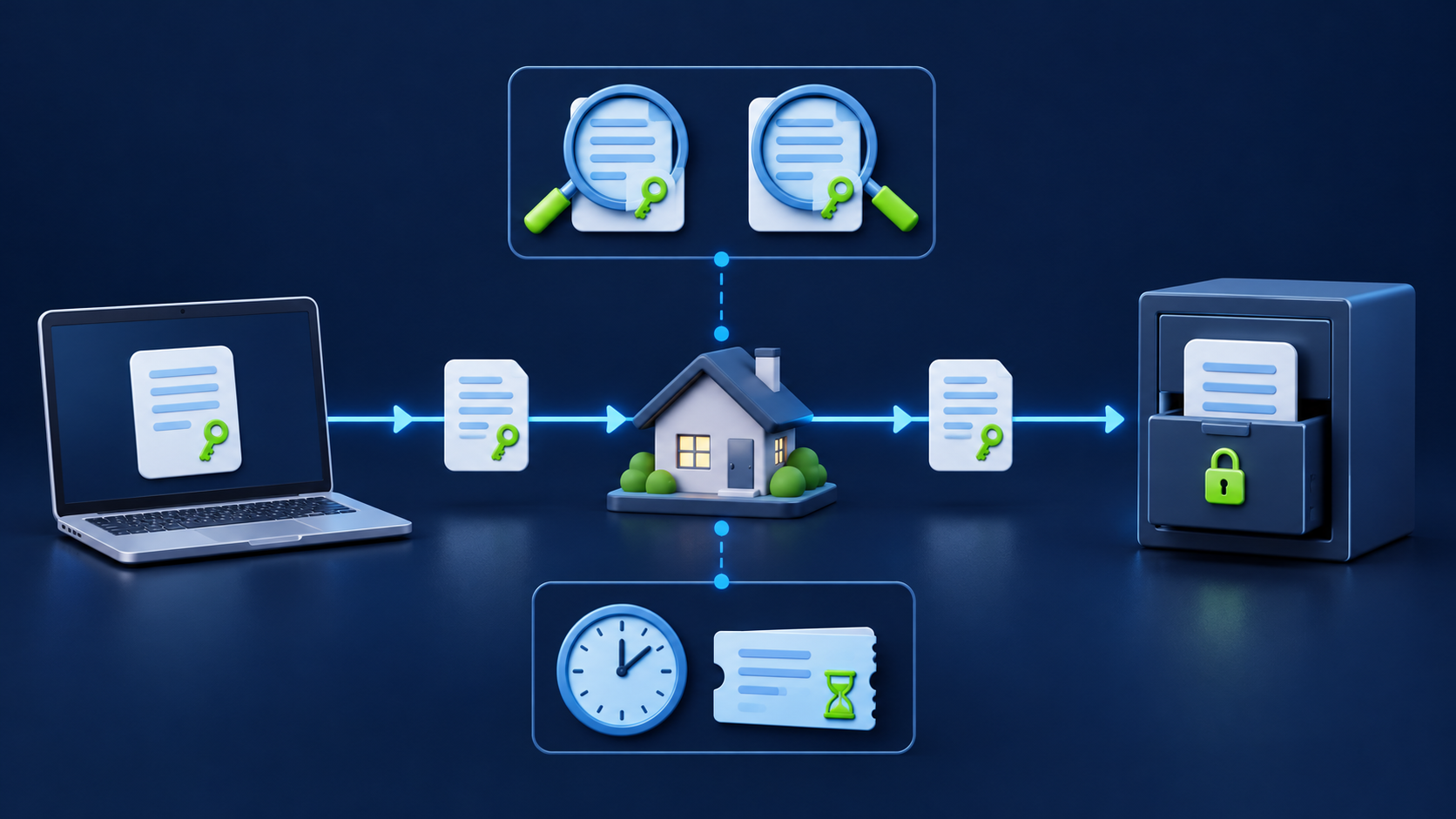
1. Identify who rejected the request
Record the connection stage, status and sanitized provider error code. A proxy authentication error and a destination 403 are different failures. Confirm whether TLS and the proxy connection succeeded before investigating the signature. Do not export the full signed URL: possession of it may grant access.
2. Create a controlled comparison
- Ask the authorized signer for a short-lived test URL to a small harmless object. Record a non-secret test identifier, creation time, intended method and validity deadline.
- Use the exact method and required signed headers. A URL signed for GET must not be tested as HEAD merely because you want a faster check.
- Keep the encoded path and query intact. Check application parsing, URL reserialization and shell handling before blaming an intermediary.
- If your organization permits a direct baseline, run it from the same client with the same request immediately beside the proxied test. Otherwise use authorized destination logs; do not bypass required network controls.
- Use low request counts and record the exit observed by the destination. Generate a fresh URL for later comparisons rather than reuse a nearly expired one.
3. Interpret the failure pattern
If both paths fail, inspect signer permissions, required headers and token validity first. If only one path fails, compare what the destination actually received: method, host, encoded path and relevant headers. Redact signing values while retaining field names and a private correlation identifier. A difference in the application request is not evidence that 98IP rewrote it.
For Amazon S3 specifically, the underlying signing credentials can expire before the URL's chosen deadline. S3 also checks expiry when a request starts, so restarting a failed transfer later is a new validity check. These examples are service-specific; verify equivalent rules for your own storage provider.
4. Check authorized source-IP restrictions
A destination policy may restrict access to a permitted network. A residential exit differs from your client's ordinary source and may change across connections. Ask the destination owner to compare its policy with the observed source. Do not widen the policy or remove authentication merely to force a pass.
If an approved workflow requires a consistent destination-visible source, evaluate 98IP static residential IP and validate the actual address against the owner's rule. For authorized regional testing without a fixed-source requirement, review dynamic residential IP. Neither product extends a token's life or fixes a wrong signature. Confirm current protocol, access and deployment limits in the operation guides; no zero-error or integration guarantee is implied. 98IP products are intended for overseas network environments.
FAQ and acceptance checklist
Should I repeat a 403 until it succeeds? Stop after a bounded diagnostic attempt. An expired token needs an authorized fresh signature, not unlimited retries.
Can I change signed query parameters? Treat the issued request as immutable unless the signer explicitly provides a new one.
Does a static IP solve every 403? It only addresses a relevant source-policy requirement when verified; permissions and signatures remain separate.
Accept the fix only after a fresh authorized request succeeds, an expired test request remains refused as expected, source-policy behavior matches the approved specification and secret-bearing logs are removed. Keep certificate verification enabled. Send support timestamps, sanitized codes and request-stage evidence, never full signed URLs or credentials.
Related Recommendations
- How to Prevent Clock Skew from Corrupting Proxy Latency and Session Metrics
- How to Audit Proxy Bypass and PAC Rules in Browser Automation
- curl Works but the Browser Fails Through a Proxy: Diagnose CORS First
- http global proxy: how to set up a stable connection
- SOCKS5 vs socks5h: How Remote DNS Changes Proxy Routing
- How to Audit HTTP/2 Proxy Connection Reuse Without Mixing Tenants
- Signed Download URL Returns 403 Through a Proxy? Check These Boundaries
- How to Audit HTTP/2 Server Push Cleanup in Shared libcurl Clients
- How to Test Proxy Keep-Alive Without Breaking IP Rotation
- How to change the IP address of a computer: It is actually very simple to follow these steps