
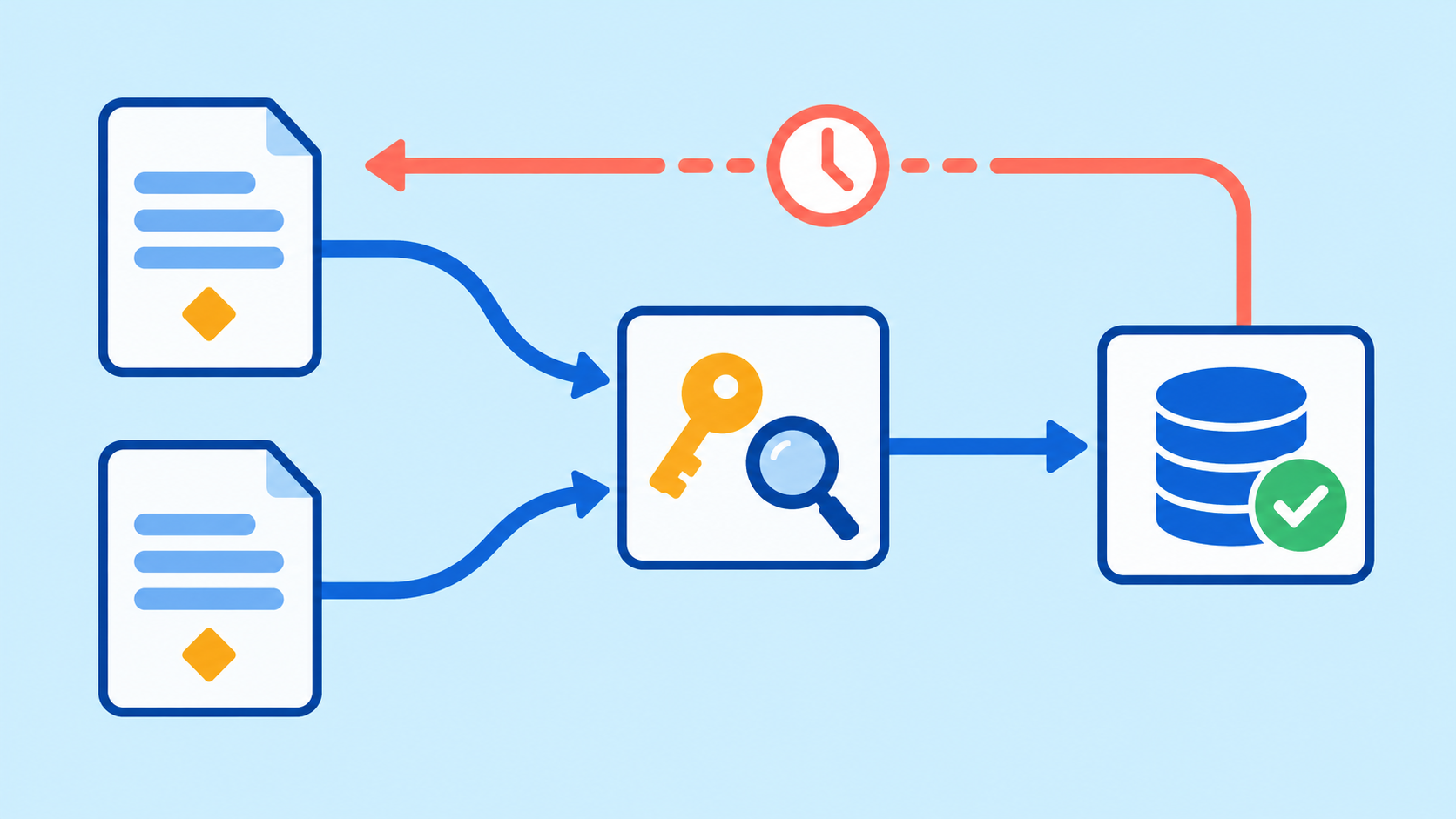
A form or write API times out through a proxy. The user clicks again, and two records appear. The key distinction is between a failed operation and a missing response: the origin may commit the first write before the client loses the reply. A different IP or a longer timeout cannot undo that commit. This guide helps developers test authorized regional forms and APIs without turning uncertain results into duplicate business actions.
Classify the outcome before retrying
Use three states: confirmed success, confirmed rejection without a write, and unknown outcome. A client timeout, reset or intermediary error usually belongs in the third state until authoritative evidence resolves it. Even a visible error page does not establish what happened inside the application. Record a local operation ID, request time and sanitized payload fingerprint before sending; keep credentials and personal form fields out of diagnostic logs.
For an unknown result, first use the origin's documented status lookup or an authorized business-record search tied to your operation reference. An immediate empty search is not always proof of failure: indexing or replication may lag. Observe the documented consistency window. If no safe lookup exists, place the operation in a review queue rather than automatically creating a new one.
Check the actual idempotency contract
An idempotency key works only when the endpoint implements it. Adding an arbitrary header cannot make a form safe. Confirm the supported header or field, key scope, retention period, payload comparison rule, concurrent-request behavior and which failures are replayed. A provider may preserve the first result, including an error, while another may reconcile partial work; use the contract for this endpoint.
Generate one non-sensitive key for one logical action before the first attempt, and persist it with the action. Reuse that key and the same intended payload for permitted retries. Do not mint a new key merely because the route changed. A genuinely new action needs a new key. After retention expires, a reused key may no longer protect the operation, so reconcile first instead of assuming unlimited protection.
Run a sandbox response-loss test
- Use an endpoint you own or a documented sandbox with disposable records and disabled external notifications. Define success as exactly one logical record and the correct business state, not one HTTP response.
- Send a baseline action through an approved route, then a separate action through the intended residential-proxy route. Save the operation reference and origin result for each.
- In your controlled test infrastructure, simulate losing the response after the origin commits. Confirm the client marks the outcome unknown rather than failed. Do not inject faults into third-party production systems.
- Resolve the original action through the documented lookup, or retry using its persisted key when the contract allows. Verify the same logical record is returned and no duplicate side effect occurs.
- Test two concurrent attempts with the same key, changed-payload reuse and a crash before local acknowledgement. Record rejection or replay behavior and inspect the authoritative record count.
Handle the cases that still need review
If the endpoint has no idempotency support, use an application-level unique operation reference and reconciliation process where you control the server. Disabling a submit button reduces accidental double clicks but does not stop worker retries or a browser refresh. Keep unknown operations visible with a pending status; do not misleadingly label them failed and invite another submission.
A payload mismatch should stop recovery until the intended action is clarified. Permission and rate-limit failures require following the origin's rules, not rotating IPs to bypass them. If lookup and retry disagree, retain both responses and escalate through the approved support path. Avoid replaying payments, orders or messages in production just to demonstrate the test.
Where a 98IP proxy belongs
Use 98IP dynamic residential proxies when authorized form testing needs regional residential network viewpoints. Select available account settings and connect your client using the operation guides. Keep one route context per test case and compare controlled cases instead of mixing a region change with a payload change.
The proxy supplies a network route; write deduplication and business-state reconciliation belong to the origin and client design. Verify your actual session settings and endpoint compatibility before testing. This article promises no transaction guarantee, specific session lifetime or measured performance result.
Acceptance checklist
- The client preserves one operation reference and key across recovery, and unknown outcomes have a separate state.
- Response-loss and crash tests produce exactly one intended record with no duplicate downstream notification or other side effect.
- Concurrent and mismatched-payload cases behave as documented; key expiry and delayed lookup have explicit review paths.
- Evidence contains sanitized request timing, origin record IDs, attempts and final state; no passwords, session cookies or personal form data are retained.
FAQ
Does a timeout mean the submission failed? No. It describes what the client observed; the origin outcome can remain unknown.
Will switching to a static IP prevent duplicates? It may change route behavior, but it cannot supply server idempotency or erase an already committed write.
Can every POST be retried with the same key? Only where the endpoint's documented contract supports it. Otherwise reconcile or review before resubmitting.
Use only owned or expressly authorized endpoints and test accounts. Respect access limits, data-protection obligations and the origin's terms. Keep destructive or externally visible actions inside approved sandboxes.
Related Recommendations
- How to Test gzip and Brotli Integrity Through a Proxy
- How to Build a Proxy Support Escalation Packet Without Leaking Credentials
- How to Troubleshoot Proxy Authentication and 407 Errors with curl
- Proxy PAC Failover Test: Verify Routing, Standby Order and DIRECT Safety
- How to change IP in a virtual machine?
- How to Run a Proxy Concurrency Ramp Test Before You Buy More Capacity
- How to Test Proxy Request-Header Integrity Before You Buy
- Residential Proxy Session Stickiness Test: Measure Stability Before You Buy
- How to Detect Residential Proxy Session Collisions Before Production
- Proxy Redirect Loop: Diagnose Repeated Logins and Region Switching