
A staging worker can complete a proxy smoke request while using the wrong production resource or writing synthetic results to a live destination. HTTP success proves neither environment identity nor correct resource ownership. Before dispatching authorized proxy jobs, check the complete binding from deployment identity to secret reference, proxy resource, target policy and output destination. This guide proposes a rehearsal and review process; it does not report tested 98IP isolation or imply that a proxy creates an application security boundary.
1. Define the environment contract independently
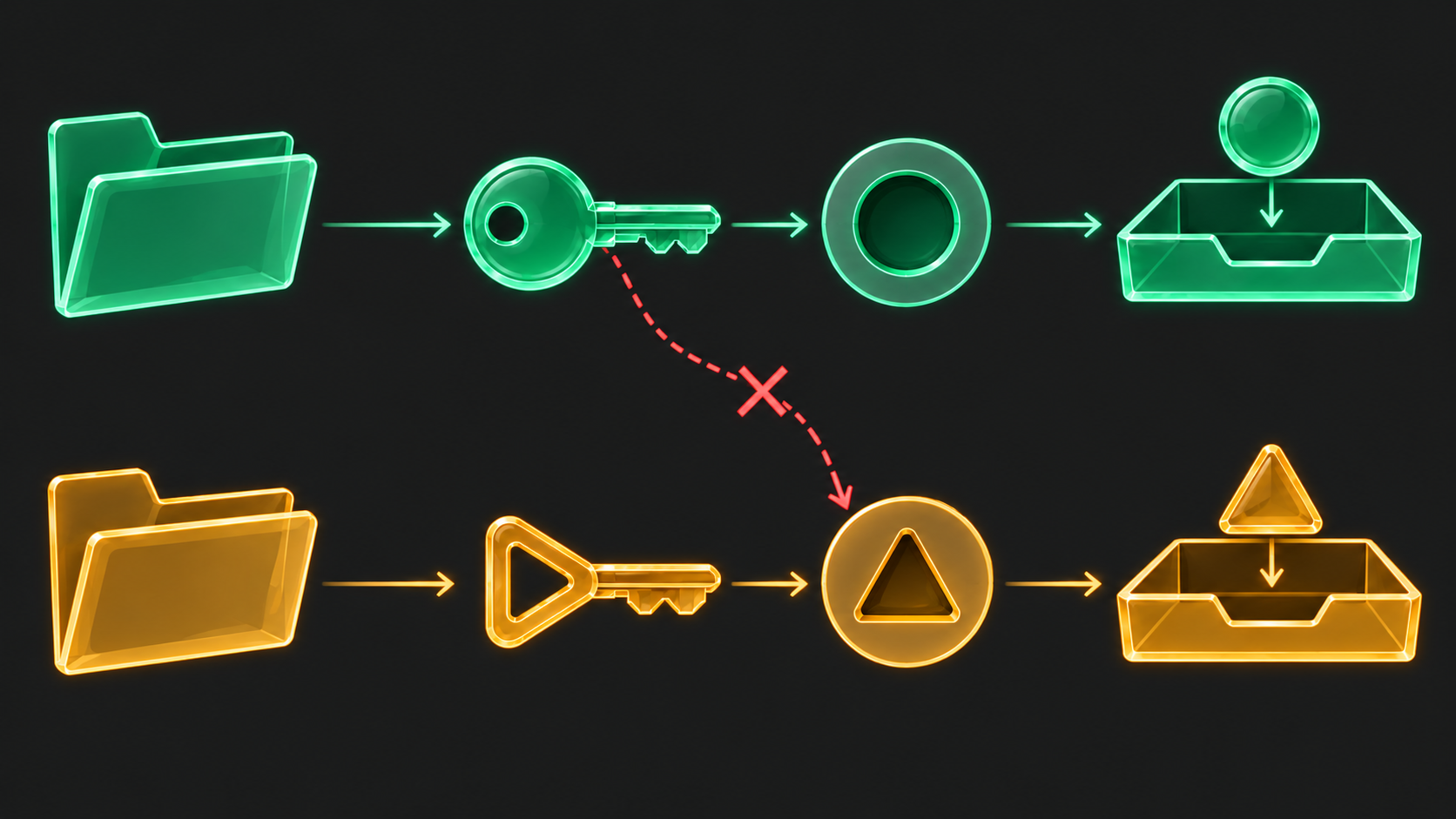
Create a small approved mapping for each deployment: trusted workload identity, permitted secret references, proxy resource reference, authorized target set, output store or queue, and job owner. Use non-secret identifiers. The expected answer must come from the deployment's approved policy, not from the same environment variable being checked. A caller-supplied environment label is not independent evidence of where the process runs.
Decide what staging is allowed to do. For a rehearsal, choose owned non-production receivers and synthetic data, with no orders, messages or customer writes. A separately authorized production read-only check may have a different explicit profile; do not let a general staging default silently inherit that permission.
Keep deploy-specific configuration outside shared application code and control access to secrets according to the workload's role. Merely renaming a credential to include staging does not restrict its real privileges. Likewise, different secret names containing the same unrestricted credential do not create provider-side separation. Confirm the actual controls available to your account before claiming isolated proxy resources.
2. Check bindings before resolving or dispatching work
- Obtain the workload's trusted deployment identity and approved policy revision. Validate that the job belongs to that deployment and that required configuration is present. Reject unknown, empty or conflicting values rather than loading another environment's defaults.
- Compare the permitted secret reference and its non-secret ownership metadata with the policy before resolving it. Do not print the secret value or a proxy URL containing credentials to prove the match.
- Verify the proxy resource and method actually supported by the account. A shared gateway hostname or the same exit IP can serve multiple contexts, so neither is sufficient evidence that the secret binding is correct.
- Validate the intended target policy, including redirects and application-generated secondary requests where relevant. Checking only the first configured URL cannot establish that the browser's entire workflow stays in scope.
- Check the output destination and side-effect channels as well: storage, queues, callbacks, notifications and result publishers. A harmless test request can still contaminate production if its results are written to the wrong sink.
- Only then admit the bounded synthetic job. Require an approved failure behavior if a client cannot use the configured proxy method; do not silently fall back to a different account, another environment or a direct route.
Use destination enforcement appropriate to your infrastructure in addition to application configuration checks. A name comparison is not a complete network policy: redirects, name resolution and browser subresources need their own design. Do not claim that this checklist alone prevents every unwanted connection.
3. Rehearse cross-binding failures without touching production
Build an isolated harness with fake secret references and test-only resource metadata. Keep real production secret values and destinations out of the negative fixtures. Let the positive staging case resolve only its permitted reference, contact the owned receiver once and write a synthetic result only to its test sink.
Then change one dimension at a time. Supply a production-labelled secret reference to the staging fixture; the preflight should refuse it before resolution. Keep the right secret reference but substitute the live output identifier; dispatch should still be blocked. Remove the environment binding entirely; it should fail closed rather than selecting a convenient default.
Test queue delivery as well: a staging-labelled message arriving at a worker with a different trusted deployment identity must not pass merely because the message says staging. Re-delivery of the same logical job should not produce extra test writes. Record the reason and the stage of rejection rather than reporting every failure as a proxy outage.
These are expected outcomes until the team observes them. Separately review the actual secrets-management access policy so a staging workload cannot read an unauthorized production secret merely by guessing its reference. A mocked application check does not prove real access-control enforcement. Use an approved policy test method that does not reveal or copy the secret.
4. Verify identity and results, not only connectivity
For the positive rehearsal, collect a non-secret run ID, trusted deployment ID, policy revision, masked resource reference, owned receiver marker and test-sink acknowledgement. Verify that the receiver's known environment matches the approved contract. An echo service returning a public exit address tells you about the route, not whether the job used an appropriately scoped credential or storage destination.
Keep proxy authentication separate from target-site authentication. The correct proxy credential does not authorize a production website action. Conversely, an origin login success does not establish that the proxy account or environment binding was correct. Avoid carrying live browser storage, cookies or target credentials into the staging browser profile.
If a check fails, locate the first disagreement: deployment identity, reference access, resource mapping, target policy, observed route or result sink. Freeze only the affected dispatch scope while investigating. Do not rotate every credential or change exits as a generic response to a configuration mix-up.
5. Control promotion, rollback and shared infrastructure
Promote the reviewed application artifact while supplying the destination deployment's independently approved configuration. Do not promote a staging secret bundle alongside the code. Compare effective non-secret mappings at startup and keep the policy revision with the release evidence. A config file called production is not proof that its resource handles are correct.
For rollback, select the known-good artifact and compatible approved bindings together. Reverting code while retaining an incompatible output mapping can preserve the incident. Inspect running workers and queued messages before assuming that changing a deployment file has changed every active process.
If the product does not provide the separation you require, document that limitation. Internal labels and separate worker pools help traceability but do not manufacture provider permissions, independent billing or isolated resources. Ask the account owner to choose a supported arrangement; do not automatically create accounts, buy capacity or broaden production access as a workaround.
The proxy credential rotation guide handles replacement of a credential. Rotation is a different operation from proving that each deployment is bound to the right resource. When cross-environment exposure is suspected, follow the organization's incident process and determine the affected scope rather than copying live secrets into a debugging report.
6. Connect the design to an actual 98IP workflow
For authorized regional website tests, ad verification or market research, consult the 98IP residential proxy product page and API configuration documentation. Select a supported method and confirm the account's actual resource and authorization controls. These pages do not by themselves establish environment-scoped subaccounts, a particular secret manager integration or a destination firewall feature.
Keep test traffic small and synthetic. Store only run identifiers, policy versions, masked references, outcomes and necessary timing. Exclude proxy passwords, app keys, extraction URLs containing secrets, authorization headers, cookies and customer content. Use access-restricted evidence with a defined retention period.
- Trusted deployment identity and the expected mapping have independent sources.
- Secret access and resource labels are distinguished from actual permissions.
- Targets, redirects, secondary requests and output sinks remain in the approved scope.
- Wrong-reference, wrong-sink and missing-binding negative cases fail before dispatch.
- The positive case reaches the intended owned receiver and test sink.
- Promotion and rollback review effective bindings without moving live secrets into test.
Does a different exit IP prove staging isolation? No. It does not establish secret scope, workload identity or the output destination.
Can two differently named secrets safely hold the same account credential? Names alone do not separate privileges. Assess the real account controls and document any shared scope.
Should a missing staging setting use production as a fallback? No. Block the job until an approved binding is supplied.
Related Recommendations
- How to Build a Proxy Support Escalation Packet Without Leaking Credentials
- Body Already Read Through a Proxy? Trace the Response Consumers
- Is the Proxy Failing—or Is the Target Throttling You? A Control-Route Test Plan
- How to Audit Proxy Bypass and PAC Rules in Browser Automation
- How to Forecast Residential Proxy Bandwidth Before Buying a Plan
- How to Test Negative DNS Cache Recovery in Proxy Clients
- RTL Product Codes Look Reversed? Test Identifier Boundaries Through Regional Proxies
- Diagnose Truncated Web-Scraping Responses Before Blaming the Proxy
- Proxy Geo-Targeting Accuracy Audit: Test Country, Region, City and ASN Claims
- How to Test Regional Cookie Consent Banners with Residential Proxies