
A small upload succeeds but a larger one returns 413 through a proxy. Before changing exits, distinguish the file's byte count from the complete request body and identify the component enforcing the limit. Another transfer may otherwise reproduce the same rejection.
This is a proposed acceptance procedure for an owned or explicitly authorized upload service, using small synthetic fixtures and documented limits. It reports no measured 98IP upload ceiling or executed performance result.
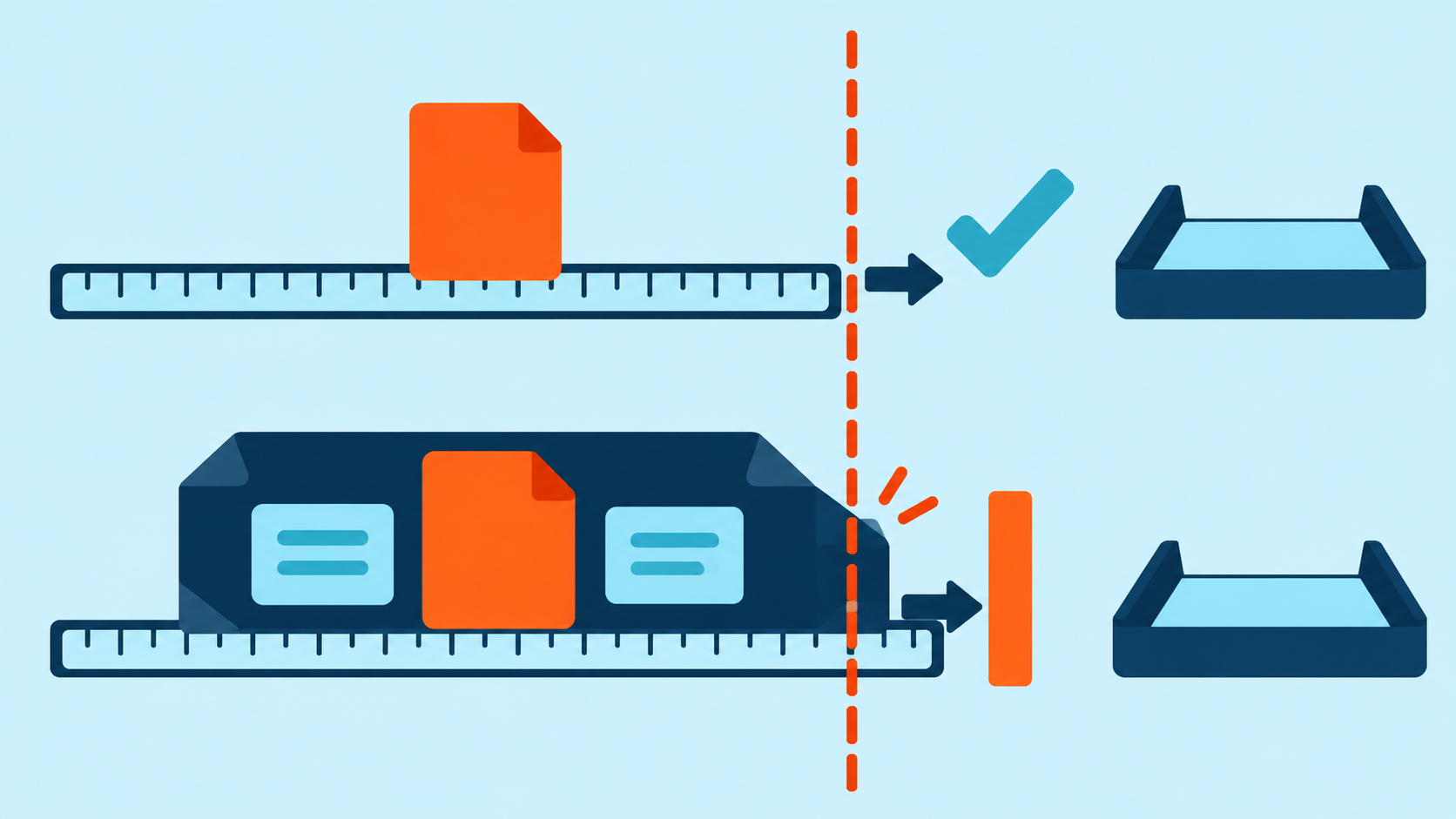
1. Establish what the limit counts
MDN describes 413 Content Too Large as rejection because a request entity exceeds a server-defined limit; the older name Payload Too Large is still common. The connection may close or a Retry-After header may be returned. The status alone does not identify the enforcing layer.
Ask the owner whether the limit covers one file, the aggregate request body, decoded content, a field or an application object. Record its byte unit and whether equality is allowed. File and body limits may both apply.
List the owned ingress, gateway, application parser and storage validator with their configurations. An HTTPS forwarding tunnel normally carries encrypted target traffic; do not assume the forwarding proxy parsed the target multipart body. Separate a response during tunnel establishment from one after the target connection is established.
2. Measure the actual serialized body
- Choose a dedicated endpoint with no downstream business action and a fixed harmless file.
- Record the file byte count, content type, synthetic filename and digest.
- Serialize ordinary fields, multipart boundaries and part headers with the real client. Measure the complete body using a supported trace or owned receiver.
- Retain sizes and synthetic case markers, excluding credentials and real customer files.
- If a streaming client exposes no total length, mark it unknown until an instrumented fixture measures it. Do not substitute file length.
Multipart framing and additional fields add bytes. Count encoded JSON bytes rather than characters. If the API requires base64, include the encoded representation and surrounding JSON; do not invent a new unsupported format for testing.
A valid Content-Length, when present, describes body length at that message boundary. It does not reveal every parser's decoded-size policy. Never falsify it or send conflicting framing to probe a production service.
3. Verify a small configured boundary
Agree a small staging limit L with the owner. With one serializer and content type, prepare valid complete bodies just below, at and just above L. For a whole-body limit, account for measured overhead before adjusting the synthetic file. Do not truncate a document into invalid content to hit a size.
Write expected results from the contract before sending; equality is not universally accepted. Run each case once with low concurrency and a correlation ID. Compare receiver evidence and stop on inconsistency instead of repeatedly increasing sizes.
Success must produce exactly one complete object with the expected marker, length and digest where the application exposes them. Rejection must leave no usable partial object or business side effect. Check temporary-object cleanup against the documented lifecycle.
4. Locate rejection with correlated evidence
Match the case ID across ingress and application logs. If ingress records rejection and the application never receives the case, investigate ingress policy. If the application receives and rejects it, inspect its parser or validation rule. A branded error page or Server header is only a clue.
Compare an approved baseline and proxy route with independently reset fixtures, the same client version, target URL, format and synthetic body. Record the target edge when available: a different route can select a differently configured edge, so a difference alone does not prove the forwarding proxy imposed the limit.
A closed connection without an observed response is an unknown transport outcome, not an inferred 413. Check the authorized receiver or upload receipt before another write to avoid duplicate objects.
5. Apply a supported remedy
For a fixed limit, reduce legitimate content using a supported format or ask the owner to change the appropriate policy. Retest the smallest representative case after approval. Raising an ingress ceiling does not remove a lower application limit.
Use resumable or multipart upload sessions only when the destination documents that API, including final assembly, integrity and cleanup. HTTP transfer chunking does not grant permission to bypass an entity-size policy. Do not rotate IPs, forge lengths or repeatedly resend oversized bodies to evade limits.
If the owner confirms a temporary condition and supplies retry guidance, honor it with bounded attempts. Waiting alone does not make a permanently oversized body fit. A rejected upload can already have transferred bytes; rejection does not imply free network use.
6. Compare access without promising a ceiling
The 98IP dynamic residential IP page is relevant when choosing a product for authorized regional upload checks. Use the API configuration page to confirm current access and account settings. Neither establishes a universal upload allowance for every client and destination; verify applicable constraints before a large transfer.
- Small valid control: one complete matching object.
- Below, equal and above the configured limit: outcomes match the stated rule.
- Same file with additional permitted fields: recompute serialized size.
- Ingress versus application: correlated records identify the rejecting layer.
- Rejected case: no usable partial object or unintended action.
- Approved remedy: fresh acceptance and stored-content checks pass.
These cases are unexecuted. Record route, client, counting scope, body and file sizes, configured limit, response, layer evidence and final storage state. Keep the run within the owner's authorization and retention policy.
FAQ and release checklist
Why can a file below the advertised number fail? The rule may count the full multipart body, use another byte unit or apply at another layer. Verify it.
Does a new exit solve 413? It does not change the body's size or grant permission to exceed destination policy.
- Scope, byte unit and equality rule are explicit.
- Serialized size is measured or marked unknown.
- Boundary fixtures remain valid synthetic content.
- Attribution has owned log evidence.
- Accepted and rejected final states are checked.
- Remediation uses a supported API with bounded retries and no policy bypass.
Related Recommendations
- How to Monitor Residential Proxy Inventory Churn After Purchase
- HTTP 200 Is Not Enough: Validate Regional Ad Landing Pages Before Launch
- Proxy Client Ephemeral Port Exhaustion: Diagnose Failures and Plan Capacity
- How to Detect Stale Cached Responses in Proxy Data Collection
- WebSocket Proxy Compatibility Test: Handshake, Heartbeat and Recovery
- Proxy Concurrency Capacity Planning: Find the Sustainable Limit
- SOCKS5 vs socks5h: How Remote DNS Changes Proxy Routing
- How to Test HTTPS Proxy TLS and Cipher Compatibility Before Purchase
- Regional Proxy Webfont Tests: Check the Rendered Face, Glyphs and Fallback Layout
- How to Build a Proxy Support Escalation Packet Without Leaking Credentials